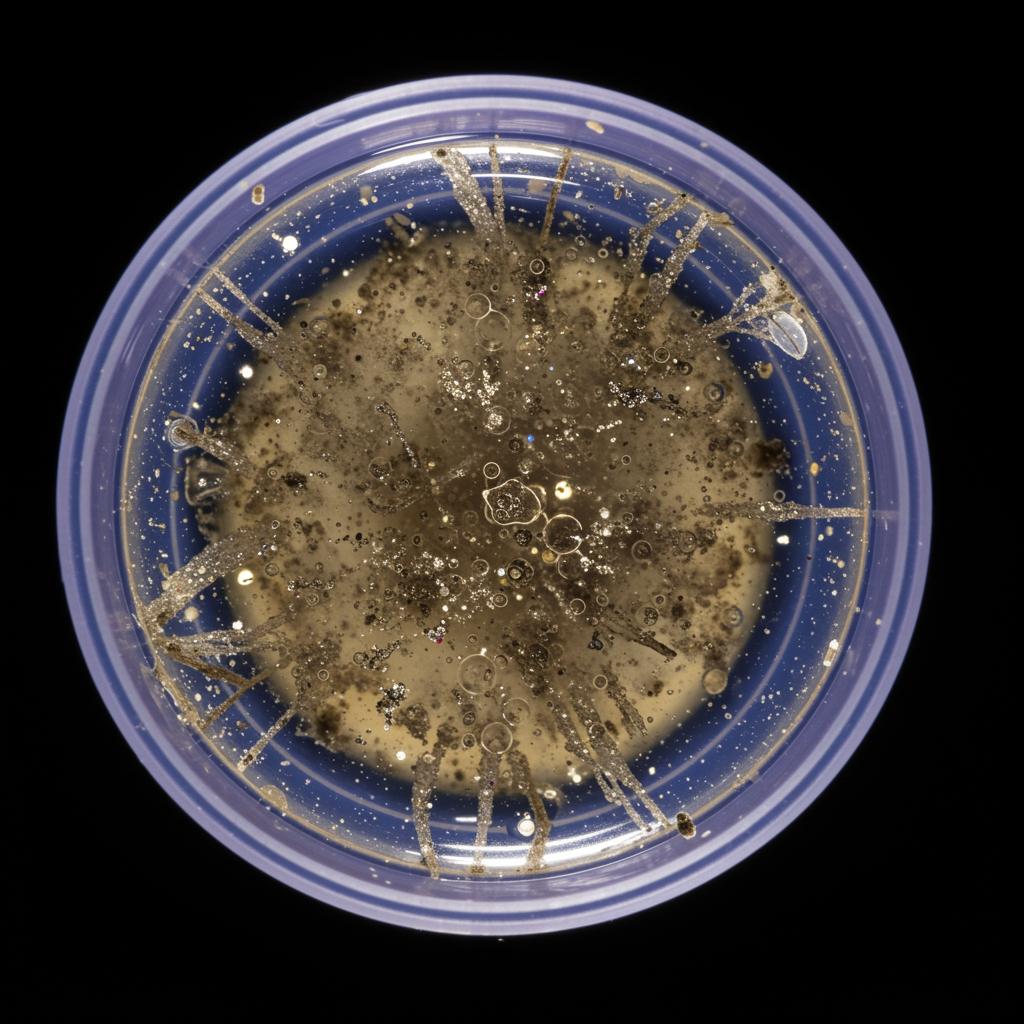
The honest answer: the science is moving fast and the verdict is preliminary, but the direction is one-way concerning. Microplastics have now been documented in human blood, lung tissue, placenta, brain tissue, breast milk, testes, prostate tumors, and the plaque inside coronary arteries. Each of those was a separate study; together they describe a body that is no longer external to plastic.
Pillar guide: for the broader picture on contamination sources, regulation, and filtration, read Microplastics in Drinking Water — The Complete Guide.
What we now know is happening inside the body
| Tissue / fluid | Study | Key finding |
|---|---|---|
| Blood | Vrije Universiteit Amsterdam, 2022 | Microplastics detected in 77% of donors |
| Lung tissue | University of Hull, 2022 | 11 of 13 surgical samples contained microplastics |
| Placenta | Ragusa et al., Environment International, 2021 | First evidence of microplastics in human placenta |
| Coronary plaque | Marfella et al., NEJM, 2024 | Patients with microplastics in plaque had 4.5× higher risk of heart attack, stroke, or death |
| Prostate cancer tumors | NYU Grossman / Loeb et al., ASCO 2026 | 9 of 10 tumors contained microplastics at 2.5× concentration of healthy tissue |
| Testicles | University of New Mexico, 2024 | Microplastics in 100% of human testicular samples |
| Brain tissue | University of New Mexico, 2024 | ~7,000 μg microplastic per gram of brain tissue (post-mortem) |
The mechanisms — what microplastics may actually do
Three biological pathways have plausible evidence in cell models and animal studies:
1. Chronic inflammation
Microplastics that lodge in tissue trigger immune-cell responses. In cell-culture experiments, exposed macrophages release inflammatory cytokines at elevated rates. Chronic low-grade inflammation is a known precursor to cardiovascular disease, certain cancers, and metabolic dysfunction.
2. Endocrine disruption
Plastic carries additives — bisphenols (BPA/BPS), phthalates, PFAS — which leach in the body and act as endocrine disruptors. These mimic or block hormones (particularly estrogen and androgens) and are independently linked to fertility issues, metabolic disease, and developmental effects.
3. Mechanical / cellular damage
Sharp-edged or fibrous microplastics can physically damage cell membranes. Sub-micron nanoplastics have been shown in in vitro studies to cross the cell membrane and accumulate in cytoplasm and nuclei. Long-term consequences in living humans are still being characterized.
The 2024 NEJM study: the strongest cardiovascular signal yet
In March 2024, Marfella et al. published in the New England Journal of Medicine what is currently the highest-quality evidence linking microplastic exposure to clinical outcomes. They followed 257 patients who underwent carotid endarterectomy. Microplastics were detected in 58% of removed plaque samples.
Over 34 months of follow-up, patients with microplastic-positive plaque had a 4.53× higher risk of a composite endpoint of myocardial infarction, stroke, or death from any cause — even after adjusting for known risk factors.
This is not a randomized controlled trial — but it is a prospective cohort study with hard clinical outcomes, and the magnitude of the effect is considerably larger than most environmental exposures studied. It cleared a high bar for publication.
What we don't yet know
To be honest about the limits of current evidence:
- No precise dose-response curve. We don't know how much exposure causes how much risk. The NEJM study showed presence vs. absence of plaque-microplastics correlated with outcomes — not graded exposure levels.
- Causation is implied, not proven. Existing human studies are observational. A randomized trial of microplastic exposure in humans is, ethically, impossible.
- Specific compounds vs. carrier effects. It's unclear whether microplastics themselves are the harm or whether they're delivery vehicles for plastic additives, adsorbed environmental toxins, and pathogens.
- Reversibility. We don't know whether reducing exposure removes existing tissue burden, only that exposure can be reduced.
What the WHO actually recommends
The World Health Organization's 2019 microplastics report concluded that current data does not justify a formal health-based guideline value — and recommended that exposure reduction is prudent given the trajectory of evidence. This is a careful, cautious-precautionary stance: not panic, but not "no concern" either.
That position has aged well. Every study published since 2019 has reinforced rather than weakened the case for reducing exposure.
What this means for you
Translating evidence into action is, at this point, low-cost and low-regret:
- Filter what you drink. Drinking water is the largest single controllable exposure — and the easiest to act on.
- Avoid heating food in plastic. Heat dramatically accelerates particle release.
- Reduce single-use plastic where convenient. Refillable bottles, glass storage, paper / aluminum where it makes sense.
- Don't panic about ambient exposure. Microplastics in the air, clothing, and environment are largely outside individual control. Focus on the controllable.
The single largest controllable exposure is what you drink.
Cut microplastic intake at the most measurable source — every sip — without changing your habits.
- 2-micron pleated microfiltration
- Reduces 99% of microplastics (particles 2 microns and larger)
- Fits any standard PET bottle
FAQ
Are microplastics actually proven to cause disease?
"Proven cause" is a high standard that requires randomized human trials, which are not ethical. What exists is strong observational evidence linking microplastic exposure to inflammation, cardiovascular events (NEJM 2024), and tumor presence (NYU 2026). The direction of evidence is one-way concerning.
How much microplastic does the average person ingest?
Estimates range from 0.1 to 5 grams per week — roughly the weight of a credit card per week at the high end. Drinking water is the largest single source by mass for most populations.
Can the body remove microplastics?
The body excretes some via the digestive system, but particles small enough to cross the gut barrier (sub-micron) accumulate. Some are cleared by macrophages, but accumulation in tissue over time is documented.
Should I be worried about my kids' exposure?
Children consume more water and food per unit body weight than adults, so per-pound exposure is higher. The Ragusa 2021 placenta study confirmed microplastic exposure begins prenatally. Reducing exposure where practical is reasonable.
Is glass-bottled water the answer?
Glass-bottled water has measurably less microplastic than PET-bottled, but plastic caps and seals still contribute. Filtering at the point of consumption is more effective and more practical for daily use.
Related reading
Pillar Guide
Microplastics in drinking water — the complete guide
Sources, health, regulation, and the full filtration landscape.
Featured Study
Microplastics found in prostate cancer tumors — NYU 2026
9 of 10 tumors at 2.5× the concentration of healthy tissue.
Primary sources
- Marfella, R. et al. (2024). Microplastics and nanoplastics in atheromas and cardiovascular events. New England Journal of Medicine.
- NYU Grossman School of Medicine / Loeb, S. et al. (2026). Pilot study, ASCO Genitourinary Cancers Symposium.
- Leslie, H. A. et al. (2022). Discovery and quantification of plastic particle pollution in human blood. Environment International.
- Ragusa, A. et al. (2021). Plasticenta: First evidence of microplastics in human placenta. Environment International.
- Jenner, L. C. et al. (2022). Detection of microplastics in human lung tissue. Science of the Total Environment.
- Campen, M. et al. (2024). Microplastics in human testes and brain tissue. University of New Mexico.
- WHO (2019). Microplastics in drinking-water. World Health Organization.
Disclaimer: This article is for general informational purposes and does not constitute medical advice. Several referenced studies are observational; consult a qualified healthcare professional for guidance on individual exposure concerns.
Back to the Microplastics Guide