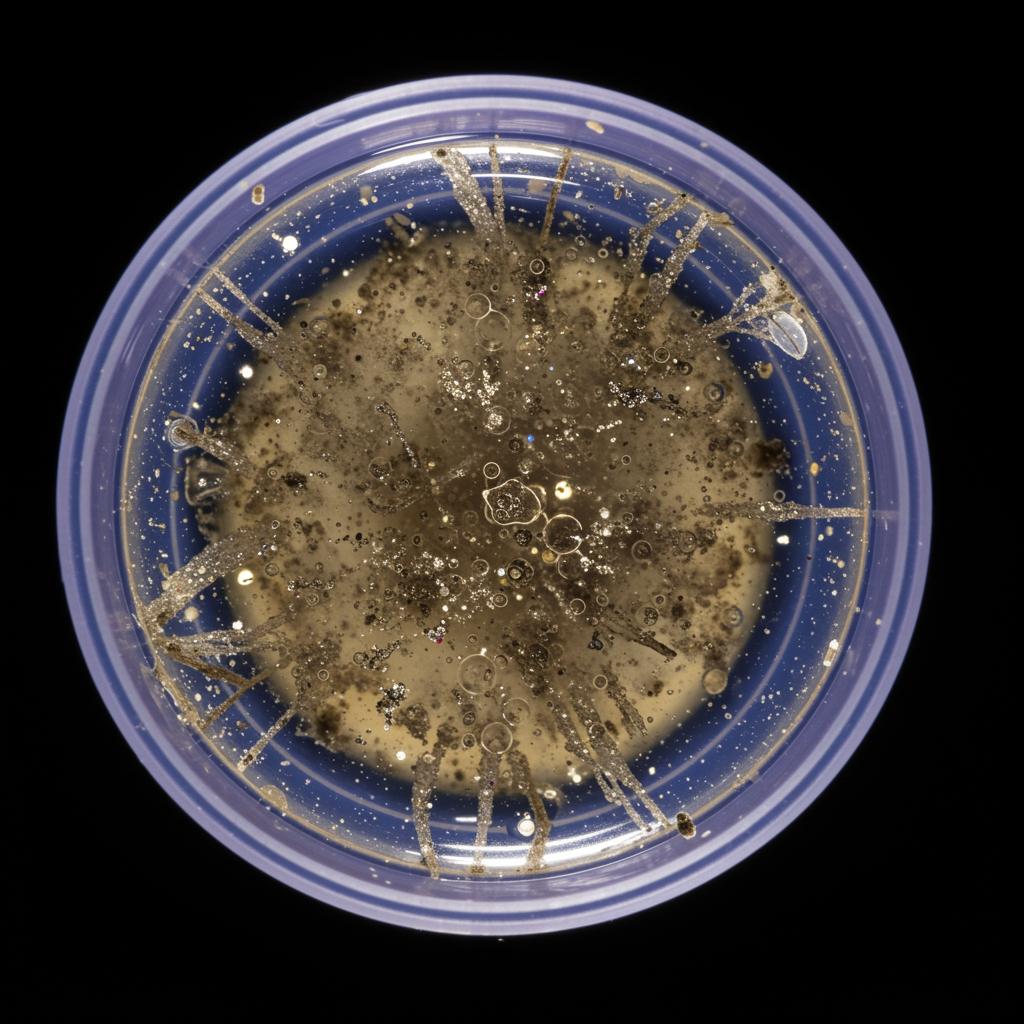
Microplastics are no longer an environmental concern alone — they are a public-health concern. They have been detected in 93% of bottled water tested worldwide, in tap water across continents, and now inside the human body itself: in blood, lungs, placentas, and tumor tissue. This guide explains what microplastics in drinking water are, where they come from, what current science says about their effect on human health, and — most importantly — what you can practically do about it today.
In this guide
1. What are microplastics?
Microplastics are plastic particles smaller than 5 millimeters in diameter (about the size of a sesame seed) and as small as a single nanometer — well below what the human eye can see. They come in two flavors:
- Primary microplastics: manufactured small — microbeads in cosmetics, industrial pellets, fibers from synthetic clothing.
- Secondary microplastics: larger plastic items that fragment over time through UV exposure, mechanical wear, and chemical breakdown — bottles, packaging, tires, fishing gear.
The most concerning size class for human exposure is below 1 micron — sometimes called nanoplastics. These are small enough to cross biological barriers, and they are increasingly the focus of medical research.
2. How microplastics get into drinking water
Microplastics enter the water supply at multiple points along the production and packaging chain:
- Source water contamination: rivers, lakes, and groundwater already contain microplastic loads from runoff, atmospheric deposition, and wastewater discharge.
- Treatment facility carry-through: conventional municipal treatment removes only a fraction of particles below 5 microns. Smaller fragments routinely pass into delivered tap water.
- Distribution infrastructure: aging pipes, plastic fittings, and rubber gaskets can release particles during transport.
- Bottling & packaging: the most studied source. The act of opening, squeezing, and reopening a PET bottle sheds particles directly into the water. Heat and UV exposure during transport accelerate this.
"The bottle itself is one of the largest contributors to the microplastic content of bottled water. The friction of the cap during opening alone releases measurable particles."
— Orb Media / State University of New York at Fredonia, 2018 study covering 259 bottles across 11 brands3. Bottled water vs. tap water
Across multiple peer-reviewed studies, bottled water contains roughly twice the microplastic load of tap water. Specifically:
| Source | Average particles / liter | % positive samples |
|---|---|---|
| Bottled water (global average) | 325 particles | 93% |
| Tap water (global average) | ~10 particles | 83% |
| Bottled water — high-end brands | up to 10,000+ | — |
The "high-end bottled water" finding came from a 2024 Columbia/Rutgers study that used a more sensitive nanoplastic detection method and found particle counts orders of magnitude higher than previous estimates. Most of those particles were below 1 micron — exactly the size class that crosses cell membranes.
The takeaway: switching from tap to bottled is not a step toward cleaner water. If anything, it is the opposite.
4. What we know about health risks
The research is young but the trajectory is consistent. Microplastics have now been detected in:
- Human blood — Vrije Universiteit Amsterdam, 2022 (77% of donors tested).
- Lung tissue — University of Hull, 2022, in 11 of 13 samples.
- Placenta — Ragusa et al., Environment International, 2021.
- Prostate cancer tumors — NYU Grossman School of Medicine pilot study, presented at ASCO 2026, finding microplastics in 9 of 10 tumors at 2.5× higher concentrations than in healthy tissue from the same patients. Read our breakdown of the NYU study →
- Brain tissue, testes, breast milk, stool — multiple 2023–2025 studies.
What this does tell us: microplastics are not staying in the environment. They cross the gut barrier, enter the bloodstream, and accumulate in organs.
What this does not yet tell us with certainty: a precise dose-response curve linking specific microplastic exposure to specific disease outcomes. That work is ongoing. But the existing data — chronic inflammation in cell models, immune-system reactivity, association with cardiovascular events in a 2024 NEJM study — is enough that major health bodies including the WHO recommend reducing avoidable exposure while research continues.
5. Regulations & what they don't yet cover
Regulation is, predictably, behind the science. As of 2026:
- United States: the EPA has acknowledged microplastics as an emerging contaminant of concern but has set no enforceable limit for drinking water. California is the first state to mandate microplastic monitoring in drinking water (SB 1422).
- European Union: the recast Drinking Water Directive (2020) requires monitoring methodology to be developed; enforceable limits are not yet in place.
- WHO: 2019 report concluded current data does not justify a health-based guideline value, while explicitly noting that the evidence base is preliminary and exposure reduction is prudent.
Translation: you cannot wait for regulation to do this for you. The body of evidence is moving faster than the rule-making.
6. How to reduce your exposure today
Practical steps, ranked by impact:
- Filter what you drink. The single largest controllable input. A fine mechanical membrane filter removes the bulk of the microplastic particle fraction.
- Avoid heating food in plastic. Heat dramatically accelerates particle release. Microwave in glass or ceramic.
- Cut single-use bottled water. Refill a glass or stainless-steel bottle from a filtered source.
- Choose natural fibers. Synthetic textiles shed fibers into wash water, which return through the food chain.
- Replace plastic kitchen tools that show wear. Cracked or scratched plastic sheds at higher rates.
- Use a HEPA-grade air filter in living and sleeping spaces, particularly in cities. A meaningful share of daily microplastic intake is inhaled, not ingested.
7. Filtration solutions: what actually works
Not every filter is created equal. The most common categories, ranked by microplastic-removal effectiveness:
| Filter type | Pore size | Microplastic effectiveness |
|---|---|---|
| Standard activated carbon (pitcher) | ~5–10 μm | Limited — passes most sub-5μm particles |
| Reverse osmosis (whole-home) | ~0.0001 μm | Excellent — but stationary, expensive, water-wasting |
| Ultrafiltration (hollow fiber) | 0.1–0.2 μm | Excellent for microplastics, fits portable devices |
| Distillation | — | Excellent, but slow and energy-intensive |
For most people, the practical sweet-spot is a bottle-top microfiltration filter — effective enough to capture the relevant microplastic particle fraction, portable enough to use everywhere, and inexpensive enough to be sustainable as a daily habit.
8. Why ~2 microns is the portable sweet spot
Why around 2 microns? Three reasons converge:
- Particle distribution. Most microplastic mass and count measured in drinking-water studies sits in particles larger than a micron — the fraction a 2-micron membrane captures by mechanical sieving. The smaller nanoplastic fraction is below any portable membrane pore and passes through.
- Mechanical sieving. A pleated polypropylene membrane blocks anything larger than its pore purely by physical size — no chemistry and no medical-grade pedigree, just a precisely-made sieve sized for the microplastic fraction.
- Flow-rate practicality. Tighter, sub-micron membranes start to require real pressure to push water through. Around 2 microns is open enough to flow at gravity / sip pressure — the threshold for a no-pump, bottle-top filter.
That is exactly why ClearFlow uses a 2-micron pleated microfiltration membrane: it captures the bulk of the microplastic fraction while staying convenient enough for everyday, gravity-and-sip use.
Reduce your exposure today — without changing your habits.
ClearFlow snaps onto any standard PET bottle and filters every sip through a 2-micron membrane.
- 99% microplastic reduction (particles 2 microns and larger)
- Universal 1881 DIN thread — fits any standard bottle
- Just swap the filter monthly — Subscribe & Save keeps you stocked
- Designed in the USA, engineered with German precision
9. FAQ
Are there microplastics in drinking water?
Yes. Studies have detected microplastics in 93% of bottled water samples and in tap water across more than a dozen countries. The amount varies by source, packaging, and treatment method.
Are microplastics in water dangerous?
Research is ongoing. Microplastics have been detected in human blood, lung tissue, placentas, and tumor tissue. While conclusive long-term studies are limited, early findings link chronic exposure to inflammation and cellular changes — enough that public-health bodies including the WHO recommend reducing exposure where possible.
Does boiling water remove microplastics?
Boiling can reduce microplastics in hard water by causing minerals to encapsulate particles which can then be filtered out, but it is not reliable on its own. Filtering through a fine mechanical membrane is far more consistent.
What size filter removes microplastics?
A mechanical membrane filter with a micron-scale pore captures the microplastic fraction measured in drinking water — the particles that pass straight through standard carbon filters.
Is bottled water worse than tap water for microplastics?
Frequently yes. Several peer-reviewed studies have found that bottled water contains, on average, twice as many microplastic particles as tap water — primarily because of plastic packaging that sheds particles, especially when exposed to heat or UV light.
How small are microplastics?
By definition, smaller than 5 mm. The most-studied health-relevant fraction is below 1 micron — small enough to cross biological membranes. Below 100 nanometers they are sometimes classified separately as nanoplastics.
Conclusion
Microplastics in drinking water are real, documented, and present in measurable quantities in nearly every commercially available water supply tested. The science on long-term health impact is still developing — but the direction of the evidence is consistent enough that the prudent action, supported by the WHO and major public-health bodies, is to reduce avoidable exposure now.
The good news: the single most controllable source — the water you drink — can be addressed with a single piece of properly engineered hardware. A portable bottle-top microfiltration filter removes the relevant microplastic particle fraction without requiring you to change your habits, your bottles, or your routine.
That is exactly the problem ClearFlow was built to solve.
Related reading
Technology
2-Micron filtration explained
What a 2-micron filter removes, why it's the portable sweet spot, and what it doesn't catch.
Bottled Water
Microplastics in bottled water — the studies
93% positive samples, 100,000+ nanoplastic particles per liter. The full evidence summary.
Tap Water
Microplastics in tap water
How they enter municipal water, why treatment plants don't catch them, and the practical fix.
Health Risks
Are microplastics dangerous?
NEJM, NYU, and Vrije Universiteit data — what we know, what we don't, what the WHO recommends.
Featured Study
NYU prostate cancer study — full breakdown
9 of 10 tumors contained microplastics at 2.5× the concentration in healthy tissue.
Product
How ClearFlow's 2-micron filter works
Pleated polypropylene microfiltration in a cap that fits any standard PET bottle.
Primary sources
- Mason, S. et al. (2018). Synthetic Polymer Contamination in Bottled Water. State University of New York at Fredonia / Orb Media.
- Qian, N. et al. (2024). Rapid single-particle chemical imaging of nanoplastics by SRS microscopy. PNAS — Columbia / Rutgers.
- NYU Grossman School of Medicine / Loeb, S. et al. (2026). Pilot study, ASCO Genitourinary Cancers Symposium.
- Ragusa, A. et al. (2021). Plasticenta: First evidence of microplastics in human placenta. Environment International.
- Leslie, H. A. et al. (2022). Discovery and quantification of plastic particle pollution in human blood. Environment International.
- Marfella, R. et al. (2024). Microplastics and nanoplastics in atheromas and cardiovascular events. New England Journal of Medicine.
- WHO (2019). Microplastics in drinking-water. World Health Organization technical report.
- Jenner, L. C. et al. (2022). Detection of microplastics in human lung tissue using μFTIR spectroscopy. Science of the Total Environment — University of Hull.
- U.S. Environmental Protection Agency. Microplastics Research.
Disclaimer: This article is for general informational purposes and does not constitute medical advice. Some referenced studies are preliminary; consult a qualified healthcare professional for guidance on individual exposure concerns.
Back to all articles