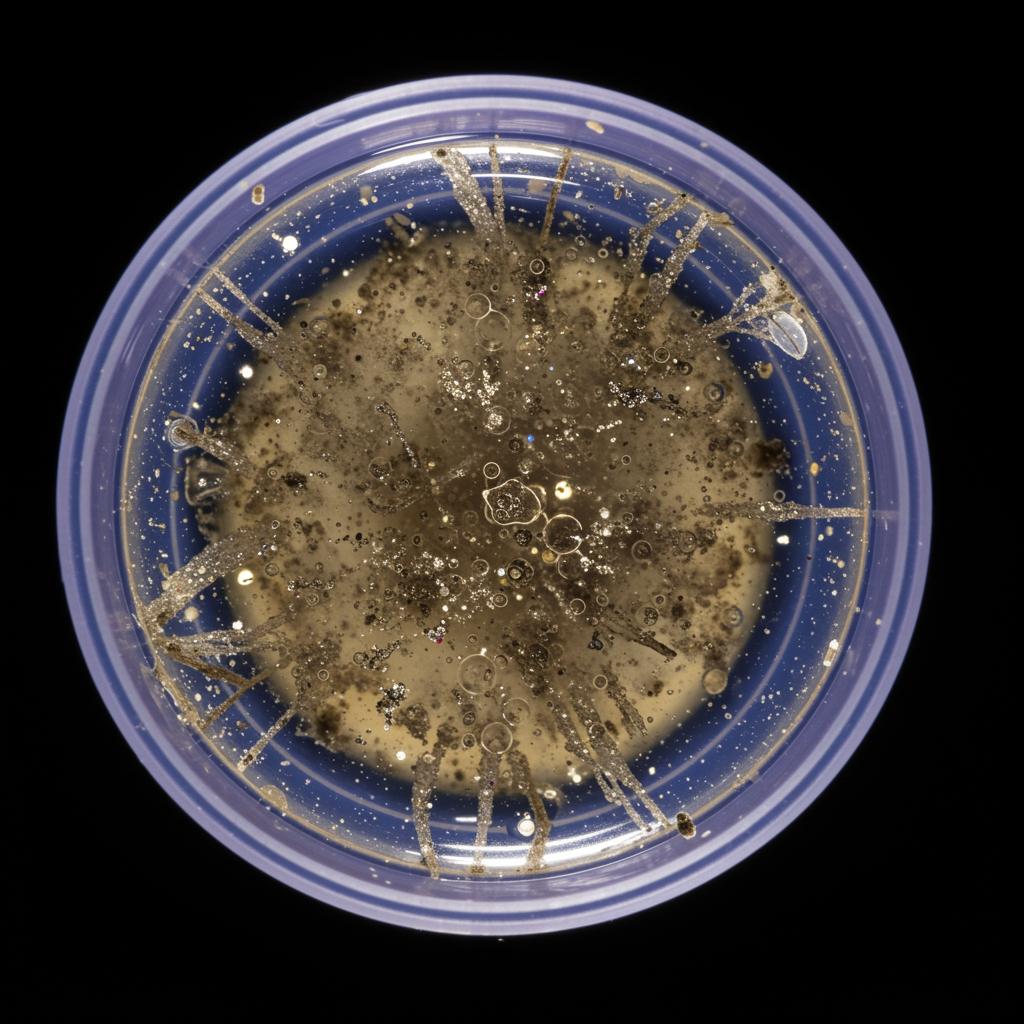
If you switched from tap to bottled water expecting cleaner water, the published research has some uncomfortable news. Across multiple peer-reviewed studies covering hundreds of brands, bottled water consistently contains more microplastics than the tap water it was supposed to improve on. Here's what the major studies measured, why bottled water is so contaminated, and what you can practically do about it.
Pillar guide: for the broader picture on contamination sources, health research, and regulation, read Microplastics in Drinking Water — The Complete Guide.
The headline numbers
| Study | Sample | Finding |
|---|---|---|
| Mason et al. — Orb Media / SUNY Fredonia (2018) | 259 bottles, 11 brands, 9 countries | 93% positive · avg 325 particles/L |
| Schymanski et al. (2018) | 22 brands, German bottled water | Particles in 80% of samples; PET, polyethylene, polypropylene |
| Qian et al. — Columbia / Rutgers (2024) | 3 popular US brands, SRS microscopy | ~110,000–370,000 particles/L — 90% nanoplastics |
| WHO synthesis report (2019) | Aggregate of available studies | Microplastic presence "ubiquitous" in bottled water globally |
The progression in those numbers — 325 in 2018, hundreds of thousands in 2024 — isn't because the water got dirtier. It's because the detection methods got better. Stimulated Raman Scattering (SRS) microscopy, used in the 2024 Columbia study, can identify particles below 100 nanometers. Earlier studies could only see down to about 6 microns. The smaller particles were always there. Now we can count them.
Why bottled water is so contaminated
Three sources contribute, in roughly this order of impact:
1. The bottle itself
The largest contributor in most studies. PET (polyethylene terephthalate) bottles are not chemically inert. Friction during bottling, transport, and especially the act of opening and closing the cap shed measurable particles directly into the water. Squeezing, dropping, or shaking the bottle accelerates this.
The Mason 2018 study found that bottles produced in the same factory but transported through different supply chains had different microplastic loads — strong evidence that the supply chain itself adds particles.
2. Heat and UV exposure
PET releases more particles when warm. A 2021 study found that bottles stored at 30°C for 14 days had 3–8× the microplastic content of bottles stored at 4°C. UV light has a similar effect — degrading the polymer surface and releasing fragments.
Practically: the bottle that sat in a hot warehouse, a delivery truck in summer, or your car's cup holder for a week is in worse shape than the one fresh from a refrigerated case.
3. Cap interaction
Every twist of the cap shears the plastic against the threads. This is part of why bottles tested immediately after opening have higher particle counts than those tested before. The 2018 SUNY study isolated this effect by sampling sealed bottles vs. bottles opened multiple times — opened bottles had measurably more particles.
Are some brands cleaner than others?
Yes, but not consistently. The Mason 2018 study found wide variation across brands and even across batches of the same brand. There is no single "clean" premium brand — and the 2024 Columbia study notably found that more expensive bottled water did not have less plastic. In several cases, popular premium brands were among the most contaminated.
The variable that matters most is not the brand but the storage and handling conditions after bottling, which the consumer cannot see or control.
Is glass-bottled water better?
Generally yes — substantially fewer microplastics in samples bottled in glass. But not zero. Plastic caps, plastic seals, and plastic during the manufacturing line still contribute small amounts. Glass-bottled water also costs significantly more and is poorly suited for an active lifestyle.
What the data adds up to
- If your goal is reducing microplastic intake, switching to bottled water is moving in the wrong direction.
- "Premium" brands offer no measurable advantage in the 2024 nanoplastic data.
- Storage conditions (heat, UV, time) matter more than brand, and you usually cannot verify them.
- The most controllable lever is filtering whatever water you actually drink, regardless of source.
Drink from any bottle. Filter every sip.
ClearFlow snaps onto the standard PET bottle thread (1881 DIN) and reduces 99% of microplastics (particles 2 microns and larger) in real time.
- Works with any bottled water brand
- Captures microplastic particles 2 microns and larger
- Reusable — turns disposable bottles into a controlled drinking source
FAQ
Is bottled water worse than tap water for microplastics?
On average, yes. Across studies, bottled water contains roughly 2× the microplastic load of tap water — primarily because of the bottle itself.
Does the brand matter?
Not in the way most people assume. The 2024 Columbia study tested popular US brands and found no meaningful "premium" benefit. Storage conditions matter more than brand.
What about water in cardboard or aluminum bottles?
Cardboard cartons are typically lined with a thin plastic film, so they still contribute. Aluminum bottles with plastic caps are better, but caps still contribute small amounts.
Is it safe to drink bottled water that's been in a hot car?
Single exposures are not acutely dangerous, but heat accelerates microplastic release. As a routine, avoid storing PET bottled water at warm temperatures.
Related reading
Pillar Guide
Microplastics in drinking water — the complete guide
The full picture: sources, health research, regulation, filtration solutions.
Cluster
Microplastics in tap water
How they get into municipal water and what current treatment misses.
Sources
- Mason, S. et al. (2018). Synthetic Polymer Contamination in Bottled Water. Frontiers in Chemistry / SUNY Fredonia / Orb Media.
- Qian, N. et al. (2024). Rapid single-particle chemical imaging of nanoplastics by SRS microscopy. PNAS — Columbia / Rutgers.
- Schymanski, D. et al. (2018). Analysis of microplastics in water by micro-Raman spectroscopy. Water Research.
- WHO (2019). Microplastics in drinking-water. World Health Organization.
- Zuccarello, P. et al. (2021). Microplastics in PET bottles: temperature-dependent release. Environmental Pollution.