Kurz: Microplastics are everywhere — in bottled water, food packaging, household dust, and laundry lint. You can cut your daily exposure significantly with small, repeatable swaps: filter the water you drink, change how you heat food, and rethink a few household habits. This guide walks through where the plastic actually comes from, which swaps move the needle, and which ones are mostly noise.
Most people think of plastic exposure as a recycling problem. It is also a personal health one. Tiny plastic particles — under 5 millimeters, often microscopic — show up in lungs, blood, and placentas, according to research summarized by Wikipedia. The good news: a handful of habits drives most of the exposure. Fix those, and you are ahead of 90% of people.
Where Your Daily Microplastic Exposure Actually Comes From
Before you change anything, it helps to know what you are fighting. Microplastic exposure is not random. A few specific sources do most of the work, and ranking them changes how you spend your time and money.
A 2024 review in Environmental Science & Technology estimated that the average American ingests between 39,000 and 52,000 microplastic particles a year through food and water alone — and inhales tens of thousands more. The breakdown matters because reducing exposure means attacking the biggest sources first, not the most visible ones.
The Top Five Real Sources
- Bottled water — a 2024 Columbia University study found roughly 240,000 plastic particles per liter, most of them nanoplastics.
- Food packaging and takeout containers, especially when heated.
- Synthetic textiles — polyester, nylon, acrylic — shedding microfibers in laundry and dust.
- Tea bags, plastic-lined paper cups, and plastic kettles, which release particles into hot liquid.
- Indoor dust from carpets, upholstery, and tire/road wear tracked inside.
Notice what is not on this list: tap water (significantly lower than bottled in most US cities), produce skins, and outdoor air in non-urban areas. Those exist as exposure routes, but they are minor compared to the top five.
Step One: Fix Your Drinking Water
Drinking water is the single biggest lever for most people because we drink water every day, multiple times a day, and the difference between a high-microplastic source and a low one is enormous.
If you regularly drink bottled water, you are getting the highest microplastic dose of anyone in the household. The plastic comes from the bottle itself — it sheds into the water during manufacturing, transport, and especially when bottles sit in warm trucks or cars. Brand matters less than packaging type. Glass and aluminum are dramatically lower in particle counts than PET plastic.
You have three realistic paths:
- Switch to filtered tap. A decent activated-carbon pitcher removes most particles above 1 micron. Cheap, and tap water already starts lower than bottled in most US municipalities.
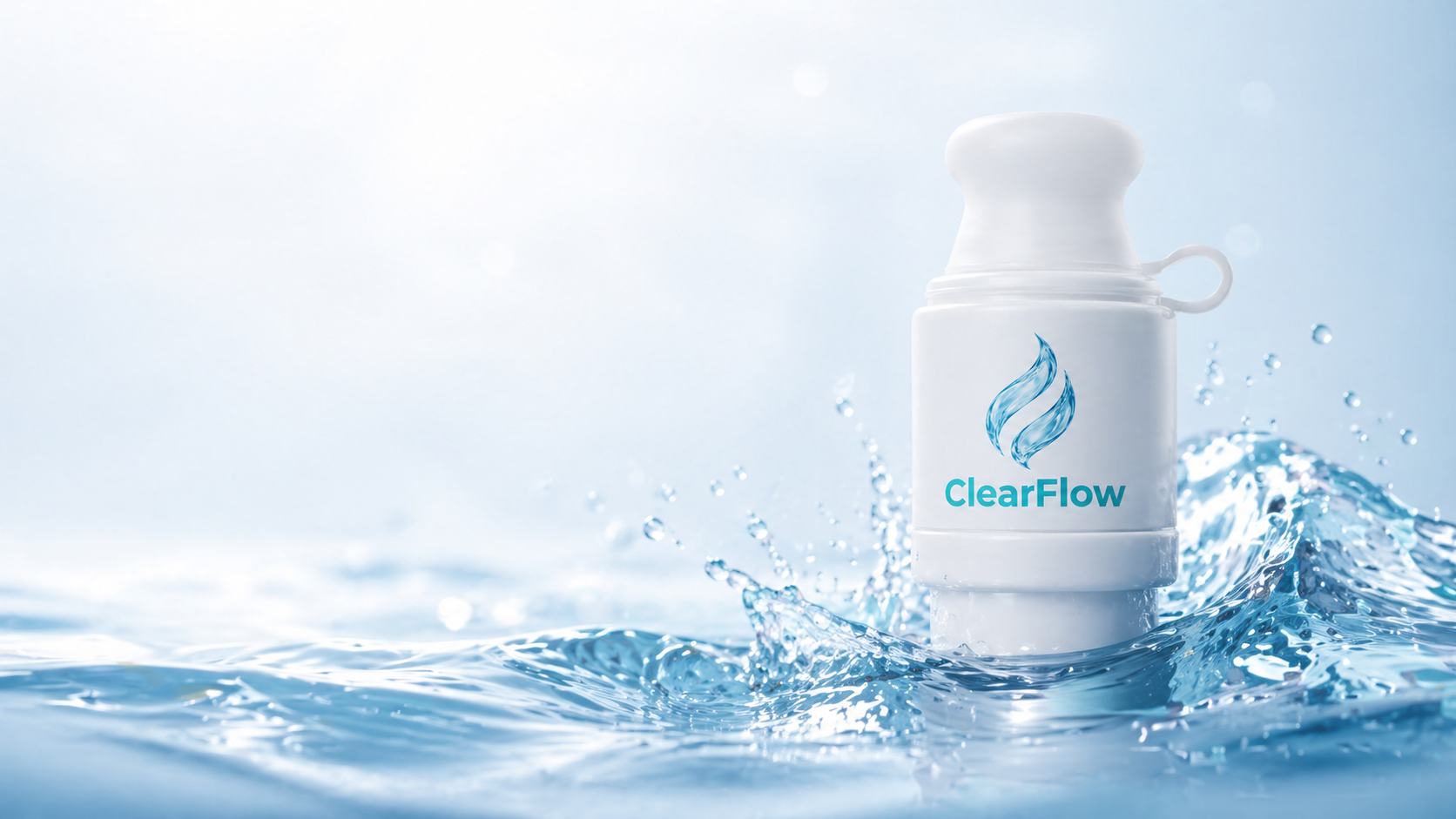
- Keep the bottle, filter the water on the way out. A cap-style on-the-go filter (the category Clear Flow created) screws onto a standard bottle and filters microplastics as you drink. Useful for travel, gym, hotels, gas stations.
- Switch packaging. Glass-bottled water has a fraction of the particles of PET. More expensive, heavier, but a clean baseline.
For a deeper dive on the source data, see Microplastics in Bottled Water: What You Need to Know and the comparison in Bottled Water vs Tap Water: Which Has More Microplastics?.
Comparing Drinking Water Choices
| Source | Approx. particles/L | Cost per liter | Convenience |
|---|---|---|---|
| PET bottled water | 240,000 (2024 study) | $1.00–$3.00 | High |
| PET bottled + cap filter | Significantly reduced | $1.10–$3.10 | High |
| Filtered tap (carbon pitcher) | Low (varies) | $0.02 | Medium |
| Glass-bottled water | Very low | $2.00–$5.00 | Low |
| Reverse-osmosis at home | Lowest | $0.05 + setup | Medium |
If you are on the road and the only option is a gas-station bottle, a cap-style filter is the fastest fix. Read more in our Clear Flow product guide and our take on the best portable water filter for 2026.
Step Two: Stop Heating Plastic. Ever.
Heat is what turns ordinary plastic contact into a microplastic event. A 2023 study in Environmental Science & Technology Letters found that microwaving plastic containers releases up to 4.22 million microplastic and 2.11 billion nanoplastic particles per square centimeter in just three minutes.
The single highest-impact rule in this guide: do not microwave food in plastic, do not pour boiling water into plastic, do not put hot food into plastic containers. Even "microwave-safe" plastic only means the container will not melt — not that it will not shed particles.
What to Swap, Practically
- Replace plastic food storage with glass (Pyrex, Anchor) or stainless steel.
- Transfer leftovers from delivery containers before reheating.
- Use a kettle that is fully stainless steel or glass — many electric kettles have plastic interior parts.
- Skip plastic tea bags. Many "silken" pyramid bags are PET or nylon. Loose-leaf or paper-only bags are safer.
- If you use a coffee maker with a plastic reservoir, run it cold-brew style or switch to a French press, AeroPress, or pour-over.
Note: paper coffee cups are usually lined with polyethylene. A 2022 study found a hot drink in a paper cup releases roughly 25,000 microplastic particles in 15 minutes. Bring your own ceramic or stainless travel cup. This single swap, done daily, removes one of the top three exposure routes for most office workers.
Step Three: Rethink Food Packaging
Packaging is the second-largest contributor after drinks. The exposure happens at three points: storage, heating, and friction (when food rubs against plastic during transport).
You do not have to go zero-waste. The biggest wins come from a few specific changes:
- Buy unpackaged produce. Loose apples, bulk rice, deli-counter cheese in paper.
- Skip pre-cut, pre-washed produce in plastic clamshells. Friction during shipping sheds particles.
- Avoid plastic-wrapped meat where possible — butcher paper is a clean alternative.
- Watch out for canned food liners. Most cans are lined with plastic resin, often containing BPA or BPA-replacement chemicals. Glass-jarred tomatoes and beans are a worthwhile upgrade for high-volume staples.
- Use beeswax wraps or silicone covers instead of cling film.
Takeout Strategy
Takeout is a daily habit for many Americans, and the containers are often the worst offenders: warm food, oily surfaces, plastic walls. A few rules cut exposure dramatically without giving up convenience:
- Order food that comes in foil, paper, or cardboard (pizza, burritos, sandwiches) over plastic clamshells.
- Transfer plastic-container food to a ceramic plate before eating, especially anything hot or oily.
- Never reheat takeout in its container.
- Ask restaurants to skip the plastic cutlery — most US cities now have laws requiring opt-in only.
Step Four: Tackle Synthetic Textiles and Laundry
Most people are surprised that clothes are a major exposure source. Polyester, nylon, and acrylic fabrics shed microfibers constantly — into the air you breathe at home, into the water system through laundry, and onto your skin.
A single polyester fleece can release up to 250,000 microfibers per wash, according to a 2016 University of California study. You inhale a portion of what stays in the home as dust.
Realistic Wardrobe and Laundry Changes
- Prioritize natural fibers — cotton, linen, wool, hemp — for items in close skin contact: underwear, sleepwear, t-shirts, bedsheets.
- Wash synthetics less often and at lower temperatures. Cold wash sheds far fewer fibers than hot.
- Use a microfiber-catching laundry bag (Guppyfriend) or an in-line filter on your washing machine drain. Some new washers (Samsung, Grundig) include built-in filters.
- Run a full load. Friction is lower when the drum is packed.
- Air-dry synthetics. Dryer heat and tumbling shred fibers fast.
You will not replace your wardrobe overnight, and you do not need to. The 80/20 rule is to start with what touches your skin most hours per day — sheets and pajamas — and replace with cotton or linen as items wear out.
Step Five: Reduce Indoor Dust
Indoor air contains 1.5 to 5 times more microplastics than outdoor air, according to a 2021 review in Environment International. The sources: synthetic carpet, upholstery, curtains, mattresses, and tire/road dust tracked in on shoes.
You inhale and swallow this dust constantly. The fix is not exotic.
- Take shoes off at the door. Single biggest lever — outdoor shoes carry tire-wear particles, which are technically microplastics.
- Vacuum with a HEPA filter at least weekly. A non-HEPA vacuum recirculates fine particles back into the air.
- Wet-mop hard floors. Damp cloths trap particles a broom kicks up.
- Open windows daily. Outdoor air is usually cleaner, paradoxically, when it comes to microplastics.
- Replace synthetic rugs slowly with wool, jute, or cotton.
- Use a HEPA air purifier in bedrooms — that is where you spend a third of your life.
Step Six: Babies, Kids, and Pets
Children are the most exposed group per kilogram of body weight. Their exposure happens through three vectors most adults do not think about: bottle feeding, floor time, and toys.
Infant Feeding
A 2020 study in Nature Food found that polypropylene baby bottles release between 1.3 and 16.2 million microplastic particles per liter of formula, depending on temperature. The fix: use glass or stainless steel baby bottles, and prepare formula by boiling water in a non-plastic kettle, cooling in a glass container, then transferring to the bottle.
Toys and Floor Time
- Avoid soft plastic teethers — silicone, wood, or natural rubber are cleaner alternatives.
- Wash plush toys regularly, but air-dry to avoid heat shedding.
- Wet-wipe hard floors where babies crawl.
Pet Considerations
Dogs and cats are exposure sentinels — they spend hours on the floor and lick everything. Stainless steel food and water bowls beat plastic, which scratches over time and harbors particles. Replace plastic chew toys with rubber or rope.
What Does Not Move the Needle
Plenty of advice online focuses on changes that produce almost zero measurable benefit. To save you time and money:
| Habit Change | Real Impact | Worth Doing? |
|---|---|---|
| Switching to wooden toothbrush | Tiny — toothbrushes are not a major exposure vector | Optional |
| Avoiding chewing gum (which contains plastic) | Real but small unless daily user | If you chew daily, yes |
| Buying "BPA-free" labeled plastic | BPA-free does not mean microplastic-free; replacement chemicals are similar | Marginal |
| Avoiding fish/seafood | Real but inconsistent across species | Choose smaller fish, lower trophic level |
| Replacing all Tupperware at once | High cost, modest benefit if you don't heat plastic anyway | Replace as items wear out |
| Sea salt avoidance | Documented contamination, but daily dose is low | Skip if budget-limited |
The pattern: anything that does not involve heat, friction, or daily volume is a minor lever. Spend your effort where exposure is largest.
A Realistic 30-Day Reduction Plan
You do not need to overhaul your life in a weekend. Here is a sequence that prioritizes biggest-impact, lowest-effort changes first.
- Days 1–3: Stop microwaving plastic. Buy two or three glass containers. Move leftovers out of plastic before reheating.
- Days 4–7: Audit your drinking water. If you use bottled, decide between filtered tap, glass-bottled, or a cap-style on-the-go filter. See On-the-Go Microplastic Filters: How Cap-Style Bottle Filters Work.
- Days 8–14: Replace plastic-lined paper cups (coffee shop) with a reusable cup. Ditch plastic tea bags. Switch to a stainless or glass kettle.
- Days 15–21: Take shoes off at the door. Run the vacuum with HEPA. Open windows daily.
- Days 22–28: Buy a microfiber laundry bag. Wash synthetics cold, less often. Replace pillowcases/sheets with cotton when next due.
- Days 29–30: Audit takeout habits. Switch your default order to one with paper or foil packaging when possible.
By day 30 you will have addressed the top five exposure sources without spending much. The compounding effect over a year is substantial — likely a 50-70% reduction in daily ingested and inhaled particles, based on the relative contribution of these sources in the published literature.
Filter the water you carry — anywhere.
If switching all your drinking water is the biggest single lever, ClearFlow makes it portable. A medical-grade 0.2-micron cap that screws onto any standard PET bottle.
- 99.99% microplastic reduction at the point of drinking
- Works with gas-station, hotel, or gym bottled water
- No pump, no power, no rebuy of single-use bottles
Common Myths Worth Killing
A lot of microplastic content online is either alarmist or wrong. A few corrections:
- "You eat a credit card of plastic per week." The viral claim came from a single 2019 estimate that has been heavily disputed. The actual amount is debated and probably lower, but the conclusion — exposure is real and worth reducing — still holds.
- "Tap water is dirtier than bottled." In most US municipalities, the opposite is true for microplastics. Bottled water is filtered well, then re-contaminated by its own packaging. See How Microplastics Get Into Bottled Water.
- "You cannot see microplastics, so they are not really there." Some are visible if you look carefully. Most are not. Visibility is not a useful proxy for exposure. See Can You See Microplastics in Water?.
- "The FDA regulates this." Currently, neither the FDA nor EPA has set enforceable microplastic limits in food or water. Background on the regulatory gap is in Microplastics and Drinking Water: What the FDA and EPA Say.
- "A microplastic detox cleanse will flush them out." No clinical evidence supports detox products. The body clears most ingested particles through normal elimination; the smallest nanoplastics are the worry, and no supplement targets them.
The Bottom Line
You cannot eliminate microplastic exposure in 2025 America. The environment is saturated. What you can do is cut your daily intake by more than half with a focused set of habits: filter or rethink your drinking water, never heat plastic, manage food packaging, address textiles and dust, and protect kids and pets disproportionately.
Treat this as an 80/20 problem. The five sources at the top of this page produce most of the exposure. Spend your time and money there, ignore the noise, and your daily plastic load drops fast. Curious how the bottle in your hand right now stacks up? Start with How Many Microplastics Are in a Bottle of Water? or browse our guide to plastic-aware living.
FAQ
What is the single most effective way to reduce microplastic exposure?
Stop heating food and drinks in plastic. Microwaving plastic containers releases millions of particles per square centimeter in minutes, making heat-plus-plastic the largest avoidable single source of exposure for most people.
Is bottled water really worse than tap water for microplastics?
In most US cities, yes. A 2024 Columbia University study found about 240,000 plastic particles per liter in bottled water, while filtered tap water typically tests far lower. The plastic mostly sheds from the bottle itself, not the water source.
Do detox cleanses or supplements remove microplastics from the body?
No. There is no clinical evidence that any detox product removes microplastics from human tissue. The body clears most ingested particles through normal elimination. Reducing intake is the only proven strategy.
Are BPA-free plastics safer when it comes to microplastics?
Not meaningfully. BPA-free addresses one specific chemical, not the shedding of microplastic particles. The replacement chemicals like BPS raise similar health questions, and the plastic still sheds particles when heated or scratched.
How quickly will I see benefits from reducing plastic exposure?
Daily intake drops the moment you change a habit, but measurable health benefits are long-term and population-level. The point of reduction is to lower lifetime cumulative exposure, especially during pregnancy and childhood when sensitivity is highest.
Should I throw out all my plastic food containers right now?
No, that is wasteful and unnecessary. The bigger rule is never to heat them or store hot or oily food in them. Replace gradually with glass or stainless steel as items wear out, and prioritize swaps for containers you use most.
Are kids more vulnerable to microplastic exposure than adults?
Yes. Per kilogram of body weight, infants and young children ingest and inhale more particles, partly through bottle feeding, floor crawling, and mouthing toys. Glass baby bottles and avoiding heated plastic feeding equipment are the highest-priority changes for families.